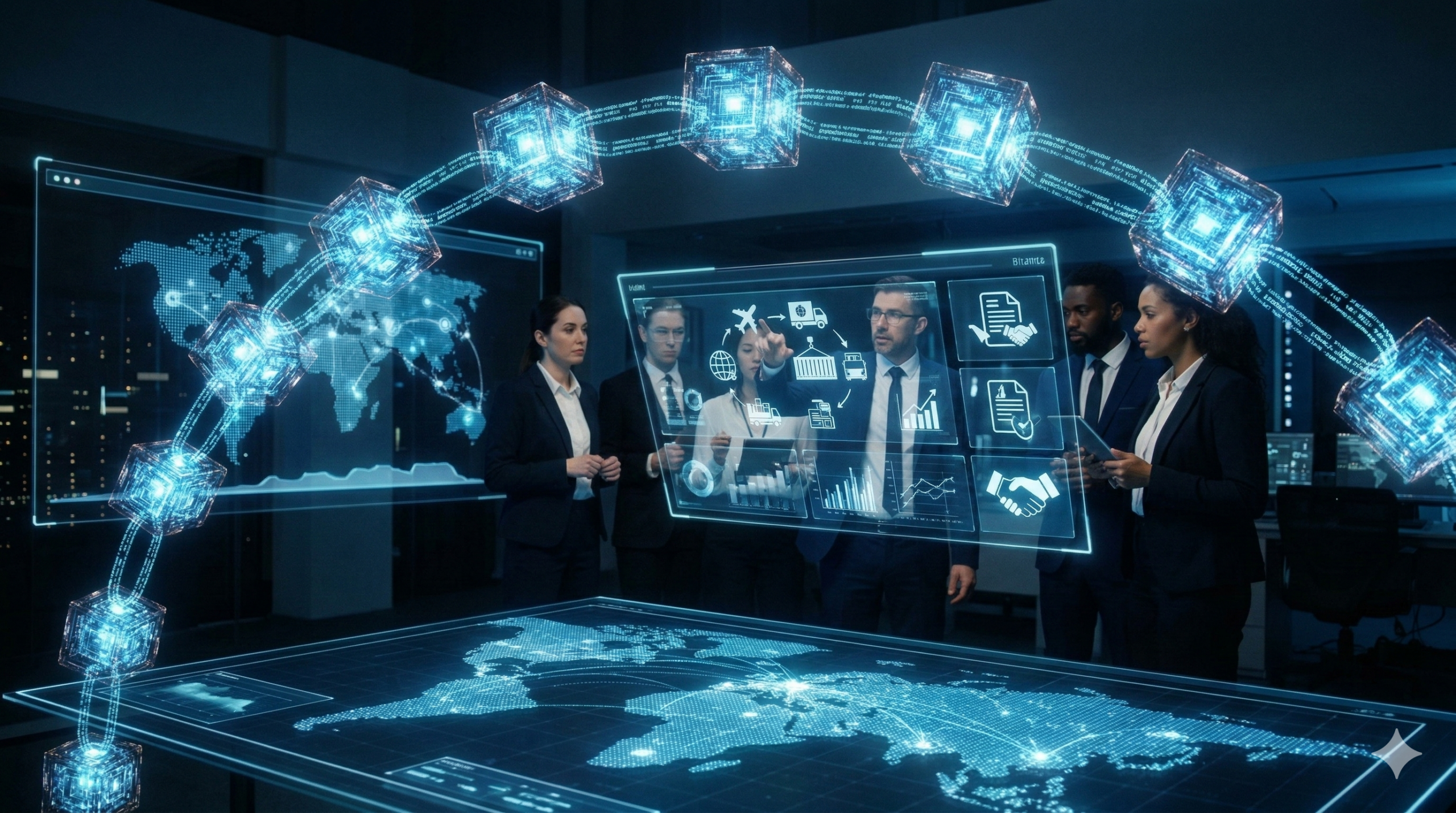
Blockchain Is Not Just About Cryptocurrency is the world ruling system
When most people hear the word Blockchain, they immediately think about cryptocurrency like Bitcoin or Ethereum.
When most people hear the word Blockchain, they immediately think about cryptocurrency like Bitcoin or Ethereum.
But the truth is — Blockchain is much bigger than crypto.
Blockchain is emerging as a trust engine for the digital world. It is a technology that can bring transparency, security, and automation into industries that traditionally rely on intermediaries and manual verification.
In the coming decade, blockchain will likely reshape the way businesses operate, transact, and build trust with customers.
So the real question is:
Why should businesses adopt blockchain?
The simple answer is:
Trust and Transparency.
What Is Blockchain in Simple Terms?
Blockchain is essentially a digital ledger that records transactions in a secure and transparent way.
Unlike traditional databases:
- Data cannot be altered
- Records cannot be deleted
- Transactions cannot be tampered with
Once a record is written into the blockchain, it becomes permanent and verifiable.
This is why blockchain is considered one of the most trustworthy digital systems ever created.
Now let’s explore how businesses can actually use this technology in real-world scenarios.
1. Blockchain in Supply Chain Management
Supply chains today are often complex and opaque. Customers rarely know where a product came from or how it was handled along the way.
Blockchain can completely change this.
With blockchain, every step of a product’s journey can be recorded and verified.
Example: Tracking Cocoa Powder
Imagine you are buying a pack of cocoa powder.
Using blockchain, you could scan a QR code on the package and instantly see:
- Which farm the cocoa beans were grown on
- When they were harvested
- Which factory processed them
- How they were transported
- Which distributor handled them
- Which store sold them
Every step is recorded on the blockchain.
This creates a transparent product history that cannot be manipulated.
Benefits for Businesses
Blockchain-powered supply chains can offer:
- Better product authenticity
- Strong quality control
- Greater consumer trust
- Improved accountability
Industries like food production, pharmaceuticals, agriculture, and luxury goods are already exploring blockchain-based supply chain systems.
2. Blockchain for Finance and Transactions
Traditional banking and financial systems often involve:
- Multiple intermediaries
- Long processing times
- High transaction fees
Blockchain has the potential to remove these inefficiencies.
With blockchain technology, cross-border transactions can become faster, cheaper, and more transparent.
But the real game changer is something called Smart Contracts.
Smart Contracts: Automating Business Agreements
A Smart Contract is a self-executing digital agreement stored on the blockchain.
It automatically executes transactions once predefined conditions are met.
Example: International Supplier Payment
Imagine a company importing goods from an overseas supplier.
Instead of manually verifying the delivery and releasing payment, the company could create a smart contract.
The contract might say:
“Payment will be released once the goods arrive at the designated port and the shipment is confirmed.”
Once the blockchain records that the shipment has arrived:
- The payment is automatically released
- No intermediaries are needed
- No manual approvals are required
Benefits
Smart contracts offer:
- Faster payments
- Reduced operational costs
- Automated agreements
- Greater trust between business partners
For global trade, this could significantly reduce bureaucracy and delays.
3. Blockchain for Security and Data Integrity
In today’s digital world, data security is one of the biggest concerns for businesses.
Blockchain offers a powerful solution.
Because blockchain records are immutable, they provide a highly secure environment for storing sensitive information.
Example: Healthcare Records
Consider a hospital storing patient medical records using blockchain.
Once a patient’s record is added:
- It cannot be altered
- It cannot be deleted
- It cannot be manipulated
If new medical data needs to be added, it is recorded as a new block linked to the existing chain.
This ensures that medical data remains accurate, transparent, and reliable.
Benefits for Healthcare Systems
Blockchain-based healthcare records can improve:
- Data accuracy
- Medical research reliability
- Insurance claim verification
- Patient trust
The Future of Blockchain in Business
Blockchain is still evolving, but its potential is enormous.
In the next decade, blockchain could transform industries such as:
- Banking
- Healthcare
- Supply chain logistics
- Real estate
- Government systems
- Digital identity
- Global trade
Instead of relying on institutions to build trust, blockchain allows technology itself to create trust.
Businesses that adopt blockchain early may gain a significant competitive advantage.
Final Thoughts
Blockchain is not just about cryptocurrency.
It represents a fundamental shift in how trust is created in the digital economy.
For businesses, blockchain offers:
- Transparency
- Security
- Automation
- Efficiency
The real question is no longer whether blockchain will change business.
The real question is:
How quickly will businesses adapt to it?
Blockchain for Business: Your New Trust EngineIntroduction: Trust Beyond the Bitcoin Hype
When most people hear the word Blockchain, their minds immediately jump to Bitcoin and Ethereum. And fair enough—crypto was the cool first act! But honestly, that’s just the tip of the iceberg and has totally overshadowed what this tech is really about.
Here’s the fundamental truth: Blockchain is a game-changing foundational technology way bigger than just digital cash. It’s quickly becoming the decentralized trust system for the entire digital world. Think about it: its whole design is built to inject serious transparency, security, and automation into complex industries that have been stuck relying on slow, expensive, and often messy middlemen and manual checks for ages.
Over the next ten years, this tech is set to completely reboot how businesses work, how they exchange value, and, most importantly, how they build rock-solid trust with their customers and partners.
So, the big question for modern companies shifts from ‘Wait, what is blockchain?’ to this critical strategy query:
Why can’t forward-thinking businesses afford to ignore blockchain anymore?
The quickest, punchiest answer is still:
It’s the ultimate platform for guaranteed Trust and proven Transparency.—–How the Blockchain Engine Works
Put simply, a blockchain is basically a permanent, distributed digital shared spreadsheet that logs every transaction across a bunch of computers in a way that’s secure, chronological, and visible to everyone involved.
What makes it so much better than your typical corporate database is its core philosophy, which guarantees data integrity:
- Data is Set in Stone (Immutability): Once a record (a ‘block’) is added to the chain, it’s cryptographically linked to the one before it, meaning you absolutely cannot change it later.
- The Permanent Record: Unlike old systems where data can be hidden or deleted, blockchain records are designed to be permanent and deletion-proof.
- Tamper-Proof Transactions: Because it’s decentralized and uses fancy cryptographic hashing, no single person or entity can mess with the transaction history without the network instantly spotting the change and rejecting it.
This built-in resistance to manipulation means that once something is on the blockchain, it’s permanently verifiable and audit-ready. This technical feature is why blockchain is globally recognized as one of the most robust and trustworthy digital record-keeping systems ever invented.
With that baseline of trust established, let’s look at where businesses are actually putting this technology to work.—–1. Blockchain’s Impact on Supply Chain Management: Proof of Origin
Let’s face it: modern supply chains are infamous for being complicated, layered, and totally opaque. This lack of clarity makes it super tough for customers, regulators, and even the companies themselves to track a product, confirm it’s legit, or verify ethical sourcing.
Blockchain completely flips the script, transforming the supply chain into a fully traceable, transparent network.
Every key event in a product’s life—from getting the raw materials to the final delivery—can be recorded as a unique, time-stamped, and verifiable transaction on the blockchain.Expanded Example: The Farm-to-Consumer Journey
Imagine a consumer buying a bag of premium gourmet cocoa powder. Instead of just trusting the brand’s label, the consumer can scan a QR code or tap an NFC tag on the packaging. This instantly brings up an undeniable, digital history linked to the blockchain:
- Source Check: Confirmation of the exact farm or cooperative where the cocoa beans were grown.
- Time & Date Stamps: Precise records of when the beans were harvested, fermented, and dried.
- Processing Chain: Identification of the factory or plant that roasted and ground them.
- Logistics & Conditions: Data logs detailing the transport routes, shipping container temperatures, and handling certifications.
- Retail/Distribution: The record of which distributor and final store handled the product.
This granular, non-manipulable data creates a transparent product history that builds serious consumer confidence.Awesome Business Benefits
Integrating blockchain into the supply chain gives you powerful strategic perks:
- Better Product Authenticity: Seriously cuts down on counterfeiting, which is huge for luxury goods and pharmaceuticals.
- Solid Quality Control and Safety: Allows for quick identification and recall management for bad batches—super critical in food production and agriculture.
- Maximized Consumer Trust: Drives loyalty by giving verifiable proof of ethical sourcing and sustainability claims.
- Improved Accountability and Auditing: Creates one shared source of truth that simplifies regulatory checks and third-party audits.
Industries jumping on this include food and beverage, pharmaceuticals, mining, and high-end manufacturing.—–2. Blockchain for Finance and Smart Contracts: The Automation Powerhouse
Traditional financial systems, especially for international payments, are a mess of:
- Too Many Middlemen: Requiring correspondent banks, clearing houses, and third-party escrow agents.
- Super Slow Processing: Settlement delays that can take days, killing global trade speed.
- Crazy High Fees: All those intermediaries add layers of cost, hitting small and medium businesses hardest.
Blockchain offers a direct, peer-to-peer replacement. It enables cross-border transactions that are almost instant, much cheaper, and totally transparent.
But the technology’s real game-changer in finance is the Smart Contract.Smart Contracts: Code That Enforces the Law
A Smart Contract is basically a piece of code—a self-executing digital deal—that lives permanently on the blockchain. Its main job is to automatically execute, control, or document legally binding events and transactions only when predefined, verified conditions are met.Expanded Example: Automated International Trade
Think of an electronics company importing specialized components from an overseas supplier.
Instead of a clunky Letter of Credit process involving multiple banks and manual paperwork, the two parties sign a smart contract.
The contract’s code is written to say: “The $500,000 payment will be automatically and instantly released from escrow to the supplier’s account ONLY when the blockchain receives confirmed data from the designated shipping port’s IoT sensors and the customs agency’s digital manifest confirming the shipment has successfully arrived and cleared.”
Once those conditions are verifiably met:
- Instant Payment: Funds are released in seconds, not days.
- No Middlemen: No banks or lawyers needed for the release mechanism.
- Guaranteed Trust: Both parties trust the immutable code, not a third party’s human judgment.
Key Benefits of Smart Contracts
Smart contracts are key to future operational sleekness:
- Way Faster Payments and Settlements: Speeding up the flow of cash.
- Massive Reduction in Costs: Cutting out intermediary fees and manual admin work.
- Guaranteed, Automated Agreements: Minimizing the risk of arguments or broken deals.
- Enhanced Trust and Efficiency: Streamlining complex global trade and corporate rules.
—–3. Blockchain for Security and Data Integrity: The Unbreakable Record
In a world full of data breaches and cyber threats, data security and integrity are the number one concerns for execs everywhere.
Blockchain provides a fundamentally better security model because its records are cryptographically unchangeable and distributed. This makes it the perfect, super-secure vault for storing and managing sensitive, high-value information.Expanded Example: The Secure Patient Medical Record
Imagine a distributed healthcare network using blockchain to manage patient medical records (EMRs).
- Immutable History: Once a doctor adds a diagnostic report, prescription, or treatment note to a patient’s blockchain record, it cannot be changed, manipulated, or secretly deleted later.
- Data Linking: New test results are added as a new, chronologically linked block to the existing chain, maintaining a complete, auditable, and verifiable lifetime medical history.
- Controlled Access: Access to this sensitive data is protected by private cryptographic keys, ensuring that only authorized medical staff, researchers, or the patient themselves can see or add data.
Benefits for Critical Systems
Blockchain-based data management brings huge perks to critical sectors:
- Perfect Data Accuracy: Ensuring that clinical data used for treatment or research is untampered with and reliable.
- Reliability for Medical Research: Providing trustworthy, audit-ready datasets that speed up drug discovery and public health studies.
- Streamlined Insurance and Claim Verification: Automating and validating insurance claims based on provably accurate medical histories.
- Maximized Patient Control and Trust: Giving individuals ultimate, verifiable control over who accesses their personal health information.
—–The Future: Blockchain as the Universal Backbone
While still evolving, the potential for blockchain technology is simply enormous. Its ultimate destiny is to be the universal infrastructure for trust and value exchange across almost every part of the global economy.
In the next decade, blockchain will shift from a cool side project to essential infrastructure, transforming industries like:
- Banking and Capital Markets: Revolutionizing asset tokenization, securities settlement, and trade finance.
- Healthcare and Pharma: Managing clinical trials, tracking drugs (anti-counterfeiting), and securing patient identities.
- Real Estate: Making fractional ownership and land title recording transparent and fraud-proof.
- Government Systems (GovTech): Powering digital IDs, secure voting, and transparent public records.
- Global Trade and Logistics: Optimizing customs clearance, shipping, and verifiable documentation.
- Digital Identity: Creating Self-Sovereign Identity where users, not big companies, control their digital presence.
The tech shift is huge: instead of the global economy relying on centralized institutions (banks, governments, auditors) to be the middlemen and enforce trust, blockchain lets technology and cryptography itself guarantee that trust.
Businesses that are smart enough to prioritize adopting blockchain today aren’t just getting a database upgrade; they’re locking in a major, long-term competitive edge based on efficiency, transparency, and consumer confidence.—–Conclusion: The Inevitable Digital Shift
Blockchain is much more than just the crazy engine behind volatile cryptocurrencies.
It represents a fundamental and necessary philosophical change in how we create trust within our increasingly digital global economy.
For the modern business, blockchain offers an incredible combination of:
- Verifiable Transparency
- Rock-Solid Security
- Process Automation
- Operational Efficiency
The time for debating if blockchain is going to fundamentally change business operations is totally over.
The main strategic concern for all organizations is now:
How quickly and effectively can we tweak our business model to start leveraging this trust-enabling technology?
